Verb That Means Taking Polluted Land and Making Healthy Again
Pollution is the introduction of harmful materials into the surround. These harmful materials are called pollutants. Pollutants can exist natural, such equally volcanic ash. They can likewise be created by human activity, such as trash or runoff produced past factories. Pollutants damage the quality of air, water, and land. Many things that are useful to people produce pollution. Cars spew pollutants from their frazzle pipes. Called-for coal to create electricity pollutes the air. Industries and homes generate garbage and sewage that tin pollute the land and water. Pesticides—chemical poisons used to impale weeds and insects—seep into waterways and harm wildlife. All living things—from 1-celled microbes to blue whales—depend on Earth'due south supply of air and water. When these resources are polluted, all forms of life are threatened. Pollution is a global trouble. Although urban areas are usually more polluted than the countryside, pollution tin can spread to remote places where no people live. For instance, pesticides and other chemicals accept been found in the Antarctic water ice sheet. In the middle of the northern Pacific Body of water, a huge collection of microscopic plastic particles forms what is known every bit the Great Pacific Garbage Patch. Air and water currents carry pollution. Sea currents and migrating fish carry marine pollutants far and wide. Winds can option upwards radioactive material accidentally released from a nuclear reactor and scatter it around the globe. Smoke from a manufactory in 1 country drifts into another country. In the past, visitors to Large Curve National Park in the U.S. state of Texas could encounter 290 kilometers (180 miles) beyond the vast landscape. Now, coal-burning ability plants in Texas and the neighboring state of Chihuahua, Mexico have spewed so much pollution into the air that visitors to Large Bend can sometimes see only fifty kilometers (30 miles). The three major types of pollution are air pollution, h2o pollution, and state pollution. Sometimes, air pollution is visible. A person can come across dark fume pour from the exhaust pipes of big trucks or factories, for case. More than often, however, air pollution is invisible. Polluted air can be dangerous, even if the pollutants are invisible. It can brand people'due south eyes burn and make them have difficulty breathing. It can as well increase the risk of lung cancer. Sometimes, air pollution kills quickly. In 1984, an accident at a pesticide plant in Bhopal, India, released a deadly gas into the air. At least viii,000 people died within days. Hundreds of thousands more were permanently injured. Natural disasters can also cause air pollution to increase quickly. When volcanoes erupt, they eject volcanic ash and gases into the temper. Volcanic ash can discolor the sky for months. After the eruption of the Indonesian volcano of Krakatoa in 1883, ash darkened the sky effectually the globe. The dimmer sky caused fewer crops to be harvested as far abroad as Europe and North America. For years, meteorologists tracked what was known every bit the "equatorial fume stream." In fact, this smoke stream was a jet stream, a current of air high in Earth'south temper that Krakatoa's air pollution made visible. Volcanic gases, such as sulfur dioxide, can kill nearby residents and make the soil infertile for years. Mountain Vesuvius, a volcano in Italy, famously erupted in 79, killing hundreds of residents of the nearby towns of Pompeii and Herculaneum. Most victims of Vesuvius were non killed by lava or landslides caused by the eruption. They were high-strung, or asphyxiated, past deadly volcanic gases. In 1986, a toxic cloud adult over Lake Nyos, Cameroon. Lake Nyos sits in the crater of a volcano. Though the volcano did not erupt, it did squirt volcanic gases into the lake. The heated gases passed through the water of the lake and nerveless as a deject that descended the slopes of the volcano and into nearby valleys. Equally the toxic cloud moved across the landscape, it killed birds and other organisms in their natural habitat. This air pollution also killed thousands of cattle and equally many as 1,700 people. Most air pollution is not natural, still. It comes from burning fossil fuels—coal, oil, and natural gas. When gasoline is burned to ability cars and trucks, it produces carbon monoxide, a colorless, odorless gas. The gas is harmful in high concentrations, or amounts. Urban center traffic produces highly concentrated carbon monoxide. Cars and factories produce other common pollutants, including nitrogen oxide, sulfur dioxide, and hydrocarbons. These chemicals react with sunlight to produce smog, a thick fog or haze of air pollution. The smog is so thick in Linfen, China, that people can seldom come across the sun. Smog can be brownish or grayish bluish, depending on which pollutants are in it. Smog makes breathing difficult, especially for children and older adults. Some cities that suffer from extreme smog upshot air pollution warnings. The government of Hong Kong, for example, will warn people not to go outside or appoint in strenuous concrete action (such equally running or swimming) when smog is very thick. When air pollutants such as nitrogen oxide and sulfur dioxide mix with moisture, they modify into acids. They then fall back to earth equally acid rain. Air current often carries acid pelting far from the pollution source. Pollutants produced past factories and power plants in Kingdom of spain can autumn equally acid pelting in Kingdom of norway. Acid rain can kill all the copse in a woods. It can also devastate lakes, streams, and other waterways. When lakes become acidic, fish tin't survive. In Sweden, acid rain created thousands of "expressionless lakes," where fish no longer live. Acrid rain likewise wears abroad marble and other kinds of rock. It has erased the words on gravestones and damaged many historic buildings and monuments. The Taj Mahal, in Agra, India, was once gleaming white. Years of exposure to acid rain has left it pale. Governments have tried to prevent acid rain by limiting the corporeality of pollutants released into the air. In Europe and N America, they have had some success, just acid rain remains a major problem in the developing world, especially Asia. Greenhouse gases are another source of air pollution. Greenhouse gases such every bit carbon dioxide and methane occur naturally in the temper. In fact, they are necessary for life on Globe. They absorb sunlight reflected from Earth, preventing information technology from escaping into space. By trapping oestrus in the atmosphere, they continue Earth warm enough for people to alive. This is called the greenhouse issue. But human being activities such as burning fossil fuels and destroying forests take increased the amount of greenhouse gases in the atmosphere. This has increased the greenhouse event, and average temperatures beyond the globe are ascent. The decade that began in the twelvemonth 2000 was the warmest on record. This increment in worldwide boilerplate temperatures, acquired in function by human activity, is chosen global warming. Global warming is causing water ice sheets and glaciers to melt. The melting ice is causing sea levels to rise at a charge per unit of two millimeters (0.09 inches) per twelvemonth. The rising seas will eventually alluvion low-lying coastal regions. Entire nations, such as the islands of Maldives, are threatened by this climate modify. Global warming also contributes to the phenomenon of ocean acidification. Ocean acidification is the process of body of water waters absorbing more carbon dioxide from the temper. Fewer organisms can survive in warmer, less salty waters. The ocean food spider web is threatened as plants and animals such as coral fail to accommodate to more acidic oceans. Scientists have predicted that global warming volition cause an increase in severe storms. It volition likewise cause more droughts in some regions and more flooding in others. The alter in average temperatures is already shrinking some habitats, the regions where plants and animals naturally live. Polar bears hunt seals from body of water ice in the Chill. The melting ice is forcing polar bears to travel farther to observe food, and their numbers are shrinking. People and governments can answer quickly and effectively to reduce air pollution. Chemicals called chlorofluorocarbons (CFCs) are a dangerous form of air pollution that governments worked to reduce in the 1980s and 1990s. CFCs are constitute in gases that absurd refrigerators, in cream products, and in aerosol cans. CFCs harm the ozone layer, a region in Earth'due south upper temper. The ozone layer protects Earth by arresting much of the sun's harmful ultraviolet radiation. When people are exposed to more ultraviolet radiations, they are more likely to develop skin cancer, eye diseases, and other illnesses. In the 1980s, scientists noticed that the ozone layer over Antarctica was thinning. This is oftentimes called the "ozone pigsty." No one lives permanently in Antarctica. But Australia, the dwelling house of more than 22 million people, lies at the border of the hole. In the 1990s, the Australian regime began an endeavour to warn people of the dangers of besides much sun. Many countries, including the United states of america, now severely limit the product of CFCs. H2o Pollution Some polluted water looks dingy, smells bad, and has garbage floating in it. Some polluted h2o looks make clean, simply is filled with harmful chemicals you can't run into or smell. Polluted water is dangerous for drinking and swimming. Some people who beverage polluted water are exposed to hazardous chemicals that may make them sick years later. Others swallow bacteria and other tiny aquatic organisms that cause affliction. The United nations estimates that 4,000 children die every day from drinking dirty h2o. Sometimes, polluted water harms people indirectly. They get sick considering the fish that live in polluted water are unsafe to eat. They take also many pollutants in their flesh. There are some natural sources of water pollution. Oil and natural gas, for example, can leak into oceans and lakes from natural underground sources. These sites are called petroleum seeps. The globe'due south largest petroleum seep is the Coal Oil Point Seep, off the coast of the U.S. state of California. The Coal Oil Point Seep releases and then much oil that tar balls launder up on nearby beaches. Tar assurance are small, gluey pieces of pollution that eventually decompose in the ocean. Human activeness besides contributes to water pollution. Chemicals and oils from factories are sometimes dumped or seep into waterways. These chemicals are chosen runoff. Chemicals in runoff can create a toxic environment for aquatic life. Runoff can also assist create a fertile environment for cyanobacteria, likewise chosen blue-green algae. Cyanobacteria reproduce chop-chop, creating a harmful algal bloom (HAB). Harmful algal blooms prevent organisms such equally plants and fish from living in the bounding main. They are associated with "dead zones" in the world's lakes and rivers, places where fiddling life exists below surface water. Mining and drilling tin too contribute to water pollution. Acid mine drainage (AMD) is a major contributor to pollution of rivers and streams near coal mines. Acid helps miners remove coal from the surrounding rocks. The acid is done into streams and rivers, where it reacts with rocks and sand. It releases chemical sulfur from the rocks and sand, creating a river rich in sulfuric acid. Sulfuric acid is toxic to plants, fish, and other aquatic organisms. Sulfuric acid is too toxic to people, making rivers polluted by AMD dangerous sources of water for drinking and hygiene. Oil spills are some other source of water pollution. In April 2010, the Deepwater Horizon oil rig exploded in the Gulf of Mexico, causing oil to gush from the ocean flooring. In the following months, hundreds of millions of gallons of oil spewed into the gulf waters. The spill produced large plumes of oil under the bounding main and an oil slick on the surface every bit big as 24,000 foursquare kilometers (9,100 square miles). The oil slick coated wetlands in the U.South. states of Louisiana and Mississippi, killing marsh plants and aquatic organisms such every bit venereal and fish. Birds, such as pelicans, became coated in oil and were unable to fly or access food. More than 2 million animals died as a outcome of the Deepwater Horizon oil spill. Cached chemical waste can also pollute water supplies. For many years, people disposed of chemical wastes carelessly, non realizing its dangers. In the 1970s, people living in the Beloved Canal area in Niagara Falls, New York, suffered from extremely high rates of cancer and nativity defects. Information technology was discovered that a chemical waste product dump had poisoned the area'due south h2o. In 1978, 800 families living in Dear Canal had to abandon their homes. If not tending of properly, radioactive waste from nuclear ability plants can escape into the surroundings. Radioactive waste matter tin harm living things and pollute the water. Sewage that has not been properly treated is a common source of water pollution. Many cities around the world have poor sewage systems and sewage handling plants. Delhi, the upper-case letter of Bharat, is home to more than 21 million people. More than half the sewage and other waste product produced in the city are dumped into the Yamuna River. This pollution makes the river dangerous to use as a source of water for drinking or hygiene. It also reduces the river's fishery, resulting in less food for the local customs. A major source of water pollution is fertilizer used in agriculture. Fertilizer is material added to soil to brand plants grow larger and faster. Fertilizers usually contain large amounts of the elements nitrogen and phosphorus, which assistance plants abound. Rainwater washes fertilizer into streams and lakes. There, the nitrogen and phosphorus cause blue-green alga to form harmful algal blooms. Rain washes other pollutants into streams and lakes. It picks upwards animal waste from cattle ranches. Cars drip oil onto the street, and rain carries it into storm drains, which pb to waterways such every bit rivers and seas. Rain sometimes washes chemical pesticides off of plants and into streams. Pesticides can as well seep into groundwater, the water beneath the surface of the Globe. Heat can pollute water. Ability plants, for example, produce a huge amount of heat. Power plants are often located on rivers so they tin use the h2o as a coolant. Cool h2o circulates through the plant, absorbing heat. The heated water is then returned to the river. Aquatic creatures are sensitive to changes in temperature. Some fish, for example, can just live in cold water. Warmer river temperatures foreclose fish eggs from hatching. Warmer river h2o too contributes to harmful algal blooms. Another type of water pollution is unproblematic garbage. The Citarum River in Indonesia, for example, has and so much garbage floating in it that yous cannot see the water. Floating trash makes the river difficult to fish in. Aquatic animals such as fish and turtles mistake trash, such equally plastic bags, for food. Plastic bags and twine can kill many ocean creatures. Chemical pollutants in trash tin also pollute the water, making information technology toxic for fish and people who use the river as a source of drinking water. The fish that are caught in a polluted river oft accept high levels of chemical toxins in their flesh. People absorb these toxins as they eat the fish. Garbage also fouls the ocean. Many plastic bottles and other pieces of trash are thrown overboard from boats. The air current blows trash out to bounding main. Ocean currents carry plastics and other floating trash to certain places on the earth, where it cannot escape. The largest of these areas, called the Groovy Pacific Garbage Patch, is in a remote part of the Pacific Ocean. According to some estimates, this garbage patch is the size of Texas. The trash is a threat to fish and seabirds, which mistake the plastic for food. Many of the plastics are covered with chemical pollutants. Many of the same pollutants that foul the water besides damage the land. Mining sometimes leaves the soil contaminated with dangerous chemicals. Pesticides and fertilizers from agricultural fields are diddled by the current of air. They can damage plants, animals, and sometimes people. Some fruits and vegetables blot the pesticides that help them grow. When people consume the fruits and vegetables, the pesticides enter their bodies. Some pesticides can cause cancer and other diseases. A pesticide called DDT (dichlorodiphenyltrichloroethane) was once ordinarily used to kill insects, particularly mosquitoes. In many parts of the globe, mosquitoes acquit a affliction chosen malaria, which kills a million people every year. Swiss chemist Paul Hermann Muller was awarded the Nobel Prize for his agreement of how Dichloro-diphenyl-trichloroethane tin control insects and other pests. Dichloro-diphenyl-trichloroethane is responsible for reducing malaria in places such as Taiwan and Sri Lanka. In 1962, American biologist Rachel Carson wrote a volume called Silent Spring, which discussed the dangers of Ddt. She argued that it could contribute to cancer in humans. She also explained how it was destroying bird eggs, which caused the number of bald eagles, brown pelicans, and ospreys to drib. In 1972, the United states of america banned the use of DDT. Many other countries also banned it. But Ddt didn't disappear entirely. Today, many governments support the use of Ddt because it remains the about constructive mode to combat malaria. Trash is another grade of land pollution. Around the world, paper, cans, drinking glass jars, plastic products, and junked cars and appliances mar the landscape. Litter makes it hard for plants and other producers in the food web to create nutrients. Animals can dice if they mistakenly swallow plastic. Garbage often contains dangerous pollutants such every bit oils, chemicals, and ink. These pollutants tin can leech into the soil and impairment plants, animals, and people. Inefficient garbage collection systems contribute to land pollution. Often, the garbage is picked up and brought to a dump, or landfill. Garbage is buried in landfills. Sometimes, communities produce so much garbage that their landfills are filling up. They are running out of places to dump their trash. A massive landfill almost Quezon City, Philippines, was the site of a land pollution tragedy in 2000. Hundreds of people lived on the slopes of the Quezon Metropolis landfill. These people fabricated their living from recycling and selling items found in the landfill. Notwithstanding, the landfill was not secure. Heavy rains caused a trash landslide, killing 218 people. Sometimes, landfills are not completely sealed off from the land around them. Pollutants from the landfill leak into the world in which they are buried. Plants that abound in the earth may exist contaminated, and the herbivores that consume the plants also get contaminated. And then do the predators that consume the herbivores. This process, where a chemical builds upward in each level of the food web, is called bioaccumulation. Pollutants leaked from landfills also leak into local groundwater supplies. At that place, the aquatic food web (from microscopic algae to fish to predators such as sharks or eagles) can suffer from bioaccumulation of toxic chemicals. Some communities do non have acceptable garbage collection systems, and trash lines the side of roads. In other places, garbage washes up on beaches. Kamilo Beach, in the U.Due south. country of Hawaii, is littered with plastic bags and bottles carried in by the tide. The trash is dangerous to body of water life and reduces economic activeness in the area. Tourism is Hawaii's largest manufacture. Polluted beaches discourage tourists from investing in the expanse's hotels, restaurants, and recreational activities. Some cities incinerate, or fire, their garbage. Incinerating trash gets rid of it, just it tin release dangerous heavy metals and chemicals into the air. So while trash incinerators can help with the problem of land pollution, they sometimes add to the problem of air pollution. Around the earth, people and governments are making efforts to combat pollution. Recycling, for instance, is becoming more than common. In recycling, trash is candy and then its useful materials tin can exist used over again. Glass, aluminum cans, and many types of plastic can exist melted and reused. Newspaper tin can be broken down and turned into new paper. Recycling reduces the amount of garbage that ends upwardly in landfills, incinerators, and waterways. Austria and Switzerland have the highest recycling rates. These nations recycle between l and threescore percent of their garbage. The U.s.a. recycles about 30 percent of its garbage. Governments can combat pollution by passing laws that limit the amount and types of chemicals factories and agribusinesses are allowed to utilize. The smoke from coal-burning power plants can be filtered. People and businesses that illegally dump pollutants into the land, water, and air can exist fined for millions of dollars. Some government programs, such as the Superfund program in the United States, tin can forcefulness polluters to clean up the sites they polluted. International agreements tin also reduce pollution. The Kyoto Protocol, a United Nations understanding to limit the emission of greenhouse gases, has been signed by 191 countries. The Us, the world's 2d-largest producer of greenhouse gases, did not sign the understanding. Other countries, such as China, the earth's largest producer of greenhouse gases, accept not met their goals. Still, many gains have been made. In 1969, the Cuyahoga River, in the U.Southward. land of Ohio, was so clogged with oil and trash that it defenseless on fire. The fire helped spur the Clean Water Act of 1972. This law express what pollutants could be released into water and gear up standards for how clean h2o should be. Today, the Cuyahoga River is much cleaner. Fish have returned to regions of the river where they one time could not survive. Only even equally some rivers are becoming cleaner, others are condign more than polluted. As countries effectually the world get wealthier, some forms of pollution increase. Countries with growing economies unremarkably need more than power plants, which produce more pollutants. Reducing pollution requires environmental, political, and economical leadership. Developed nations must piece of work to reduce and recycle their materials, while developing nations must piece of work to strengthen their economies without destroying the environs. Adult and developing countries must work together toward the common goal of protecting the environment for hereafter use.
Air Pollution
Land Pollution
Reducing Pollution
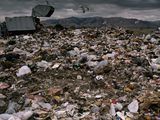
Garbage in, garbage out.
Photo by Dennis Finley
Calorie-free Pollution
Light pollution is the excess amount of light in the nighttime heaven. Calorie-free pollution, also called photopollution, is virtually ever found in urban areas. Light pollution can disrupt ecosystems by confusing the distinction between night and day. Nocturnal animals, those that are active at night, may venture out during the day, while diurnal animals, which are active during daylight hours, may remain active well into the night. Feeding and sleep patterns may be confused. Low-cal pollution also indicates an excess utilize of energy.
The dark-sky movement is a campaign past people to reduce calorie-free pollution. This would reduce energy use, allow ecosystems to role more usually, and allow scientists and stargazers to observe the atmosphere.
Noise Pollution
Noise pollution is the abiding presence of loud, disruptive noises in an area. Usually, noise pollution is caused by construction or nearby transportation facilities, such as airports.
Noise pollution is unpleasant, and can be dangerous. Some songbirds, such as robins, are unable to communicate or find food in the presence of heavy noise disturbance. The sound waves produced by some racket pollutants can disrupt the sonar used by marine animals to communicate or locate food.
How Long Does It Last?
Different materials decompose at different rates. How long does it take for these mutual types of trash to break down?
- Paper: 2-iv weeks
- Orange skin: 6 months
- Milk carton: 5 years
- Plastic bag: xv years
- Tin can: 100 years
- Plastic bottle: 450 years
- Drinking glass bottle: 500 years
- Styrofoam: Never
Indoor Air Pollution
The air inside your business firm tin exist polluted. Air and carpeting cleaners, insect sprays, and cigarettes are all sources of indoor air pollution.
acid
Substantive
chemical compound that reacts with a base of operations to grade a salt. Acids can corrode some natural materials. Acids have pH levels lower than 7.
acid mine drainage
Substantive
period of acid or acidic liquid from metal mines or coal mines.
acrid rain
Substantive
precipitation with high levels of nitric and sulfuric acids. Acid rain tin can be manmade or occur naturally.
arrange
Verb
to adapt to new surroundings or a new situation.
acceptable
Describing word
suitable or expert enough.
aerosol can
Noun
container of liquid material under high force per unit area. When released through a small opening, the liquid becomes a spray or foam.
agribusiness
Noun
the strategy of applying turn a profit-making practices to the operation of farms and ranches.
Noun
the art and scientific discipline of cultivating land for growing crops (farming) or raising livestock (ranching).
Substantive
harmful chemicals in the atmosphere.
algae
Plural Noun
(singular: alga) diverse group of aquatic organisms, the largest of which are seaweeds.
aluminum
Substantive
silvery, reflective metal chemical element with the symbol Al.
Antarctic
Substantive
region at Globe'south farthermost s, encompassed past the Antarctic Circle.
aquatic
Adjective
having to do with h2o.
choke
Verb
to choke or suffocate.
Noun
layers of gases surrounding a planet or other angelic body.
Plural Noun
(atypical: bacterium) single-celled organisms found in every ecosystem on Earth.
ban
Verb
to prohibit or not let.
Substantive
narrow strip of state that lies along a body of water.
bioaccumulation
Substantive
procedure by which chemicals are absorbed by an organism, either from exposure to a substance with the chemic or by consumption of food containing the chemical.
biologist
Substantive
scientist who studies living organisms.
birth defect
Noun
physical disorder present at nativity and not developed later.
blueish-green algae
Noun
blazon of aquatic bacteria (not algae) that tin photosynthesize low-cal to create energy. As well called cyanobacteria and (in freshwater habitats) pond scum.
cancer
Substantive
growth of aberrant cells in the body.
Substantive
city where a region'south government is located.
carbon dioxide
Noun
greenhouse gas produced by animals during respiration and used by plants during photosynthesis. Carbon dioxide is as well the byproduct of burning fossil fuels.
carbon monoxide
Substantive
colorless, odorless, and tasteless gas that is slightly less dumbo than air. It can be toxic to humans.
cattle
Noun
cows and oxen.
chlorofluorocarbon (Chlorofluorocarbon)
Noun
chemical chemical compound by and large used in refrigerants and flame-retardants. Some CFCs have subversive effects on the ozone layer.
circulate
Verb
to move effectually, often in a pattern.
Make clean Water Act
Noun
(1972) federal law protecting water from pollution.
Noun
gradual changes in all the interconnected conditions elements on our planet.
Substantive
visible mass of tiny water aerosol or water ice crystals in Earth'south atmosphere.
Noun
nighttime, solid fossil fuel mined from the earth.
Coal Oil Point
Noun
place in the Pacific Body of water off the coast of the U.S. country of California that naturally emits gases such as methane; a seep field.
Substantive
edge of land forth the body of water or other large body of water.
concentration
Noun
measure of the corporeality of a substance or grouping in a specific identify.
contaminate
Verb
to poison or make hazardous.
coolant
Substantive
substance, usually a liquid or gas, that reduces the temperature of a organisation or piece of machinery.
Substantive
tiny sea animate being, some of which secrete calcium carbonate to class reefs.
Noun
bowl-shaped depression formed past a volcanic eruption or impact of a meteorite.
Substantive
agricultural produce.
Substantive
steady, predictable catamenia of fluid within a larger body of that fluid.
blue-green alga
Noun
type of aquatic leaner that can photosynthesize light to create energy. Also called blueish-green algae (fifty-fifty though it is not algae) and (in freshwater habitats) pond scum.
Ddt
Noun
(dichloro-diphenyl-trichloroethane) toxic chemical used as an insecticide just illegal for well-nigh uses in the U.S. since 1972.
dead lake
Noun
torso of water where fish or other aquatic organisms no longer live beneath the surface due to natural or manmade pollution.
Noun
area of low oxygen in a body of h2o.
decompose
Verb
to decay or break downwardly.
Deepwater Horizon
Noun
oil rig in the Gulf of Mexico that exploded in 2010.
descend
Verb
to go from a college to a lower place.
devastate
Verb
to destroy.
developing world
Noun
nations with low per-capita income, little infrastructure, and a small-scale centre class.
discourage
Verb
to disapprove or encourage someone non to exercise something.
dispose
Verb
to throw away or get rid of.
drab
Describing word
dull or tedious.
drill
Verb
to make a hole using a rotating digging tool.
Substantive
menstruation of profoundly reduced precipitation.
Noun
our planet, the third from the Sun. The Earth is the only place in the known universe that supports life.
economic
Adjective
having to do with money.
squirt
Verb
to become rid of or throw out.
electricity
Noun
prepare of physical phenomena associated with the presence and period of electric accuse.
environment
Noun
weather condition that surround and influence an organism or community.
erupt
Verb
to explode or suddenly eject cloth.
exhaust
Noun
gases and particles expelled from an engine.
expel
Verb
to eject or force out.
factory
Substantive
i or more buildings used for the manufacture of a product.
fertilizer
Noun
nutrient-rich chemic substance (natural or manmade) applied to soil to encourage plant growth.
fine
Verb
to punish, usually past charging an economic penalty or fee. Or, the penalty or fee itself.
fishery
Noun
industry or occupation of harvesting fish, either in the wild or through aquaculture.
Noun
overflow of a body of water onto land.
Substantive
clouds at ground level.
Noun
material, usually of plant or beast origin, that living organisms employ to obtain nutrients.
Noun
all related food chains in an ecosystem. Also called a food cycle.
forest
Substantive
ecosystem filled with copse and underbrush.
fossil fuel
Substantive
coal, oil, or natural gas. Fossil fuels formed from the remains of ancient plants and animals.
gasoline
Substantive
liquid mixture made from oil and used to run many motor vehicles.
generate
Verb
to create or brainstorm.
Substantive
mass of ice that moves slowly over land.
gleam
Verb
to shine brightly.
Substantive
increment in the average temperature of the Earth's air and oceans.
government
Noun
system or order of a nation, state, or other political unit.
gravestone
Substantive
stone marking a person's burying place, often engraved with the person's name and dates of nascency and death.
Noun
area of the North Pacific Ocean where currents accept trapped huge amounts of debris, generally plastics.
Noun
phenomenon where gases allow sunlight to enter Earth's atmosphere simply make information technology hard for oestrus to escape.
greenhouse gas
Noun
gas in the temper, such as carbon dioxide, methane, h2o vapor, and ozone, that absorbs solar oestrus reflected by the surface of the World, warming the temper.
Noun
water plant in an aquifer.
Noun
environment where an organism lives throughout the twelvemonth or for shorter periods of time.
harmful
Adjective
damaging.
harmful algal bloom (HAB)
Noun
rapid growth of algae, bacteria, or other plankton that can threaten an aquatic surround by reducing the amount of oxygen in the h2o, blocking sunlight, or releasing toxic chemicals.
harvest
Noun
the gathering and collection of crops, including both plants and animals.
take a chance
Noun
danger or risk.
brume
Noun
group of solid and liquid particles in the air that makes it difficult to see.
heavy metallic
Noun
chemical substance with a specific gravity of at least 5.0.
Noun
organism that eats mainly plants and other producers.
hydrocarbon
Noun
chemical chemical compound made entirely of the elements hydrogen and carbon.
hygiene
Noun
scientific discipline and methods of keeping clean and healthy.
Noun
thick layer of glacial ice that covers a large area of land.
incinerate
Verb
to burn up entirely.
industry
Noun
activity that produces appurtenances and services.
inefficient
Adjective
not able to perform a task well.
infertile
Adjective
unproductive or barren.
ink
Noun
nighttime liquid used for printing or artwork.
invest
Verb
to contribute time or money.
invisible
Adjective
unable to be seen.
Noun
body of land surrounded by water.
issue
Verb
to distribute, give away, or sell.
Noun
winds speeding through the upper atmosphere.
Krakatoa
Noun
island in Indonesia, site of major volcanic eruption in 1883. Also called Krakatau.
Kyoto Protocol
Noun
(1997) international agreement to reduce greenhouse gas emissions.
Noun
ocean surrounded by land.
landfill
Substantive
site where garbage is layered with dirt and other absorbing cloth to forbid contamination of the surrounding land or water.
land pollution
Noun
introduction of harmful materials into the surface environment.
Substantive
the geographic features of a region.
Noun
the fall of rocks, soil, and other materials from a mountain, loma, or gradient.
lava
Noun
molten stone, or magma, that erupts from volcanoes or fissures in the World'southward surface.
leech
Noun
carnivorous or bloodsucking worm.
Beloved Canal
Noun
New York boondocks and the site of a old toxic waste dump.
lung
Noun
organ in an animal that is necessary for breathing.
malaria
Noun
infectious disease caused by a parasite carried by mosquitoes.
mar
Verb
to spoil or damage.
marble
Noun
type of metamorphic rock.
marine
Adjective
having to do with the ocean.
Noun
wetland area normally covered past a shallow layer of seawater or freshwater.
massive
Adjective
very large or heavy.
meteorologist
Noun
person who studies patterns and changes in Earth's atmosphere.
methane
Noun
chemic compound that is the basic ingredient of natural gas.
microbe
Noun
tiny organism, usually a bacterium.
microscopic
Adjective
very small.
mine
Verb
to extract minerals from the World.
Substantive
procedure of extracting ore from the World.
monument
Noun
large structure representing an consequence, idea, or person.
Substantive
political unit made of people who share a common territory.
natural disaster
Substantive
an event occurring naturally that has large-scale furnishings on the surround and people, such as a volcano, earthquake, or hurricane.
Substantive
blazon of fossil fuel made up mostly of the gas methyl hydride.
nitrogen
Noun
chemic chemical element with the symbol N, whose gas course is 78% of the World'south temper.
nitrogen oxide
Noun
1 of many chemic compounds made of different combinations of nitrogen and oxygen.
Nobel Prize
Noun
one of five awards established by the Swedish businessman Alfred Nobel in 1901. Nobel Prizes are awarded in physics, chemistry, medicine, literature, and peace.
Noun
substance an organism needs for free energy, growth, and life.
ocean acidification
Noun
decrease in the body of water's pH levels, caused primarily by increased carbon dioxide. Ocean acidification threatens corals and shellfish.
oil
Noun
fossil fuel formed from the remains of marine plants and animals. Also known every bit petroleum or crude oil.
oil rig
Noun
complex serial of machinery and systems used to drill for oil on land.
oil slick
Noun
shine, nighttime coating on the surface of a body of water caused by an oil spill or leak.
oil spill
Substantive
accidental release of petroleum products into a body of h2o, either by an oil tanker or an offshore oil rig.
ozone hole
Substantive
circular pattern, commonly located almost the Antarctic, of thin atmospheric ozone, which absorbs harmful ultraviolet sunlight.
Noun
layer in the atmosphere containing the gas ozone, which absorbs nearly of the sun'south ultraviolet radiation.
particle
Substantive
modest piece of material.
Paul Hermann Muller
Noun
(1899-1965) Swiss chemist and man of affairs.
pelican
Noun
large marine bird with a big pecker.
permanent
Describing word
constant or lasting forever.
pesticide
Noun
natural or manufactured substance used to kill organisms that threaten agriculture or are undesirable. Pesticides tin exist fungicides (which kill harmful fungi), insecticides (which kill harmful insects), herbicides (which kill harmful plants), or rodenticides (which kill harmful rodents.)
Noun
fossil fuel formed from the remains of ancient organisms. Also called crude oil.
petroleum seep
Noun
identify where oil or natural gas from the Earth's interior leaks to the surface naturally.
phenomenon
Noun
an unusual act or occurrence.
phosphorus
Noun
chemical element with the symbol P.
plastic
Substantive
chemical material that tin can be easily shaped when heated to a high temperature.
plume
Noun
single, upward flow of a fluid, such as water or smoke.
toxicant
Noun
substance that harms health.
pollutant
Noun
chemical or other substance that harms a natural resource.
Noun
introduction of harmful materials into the surround.
power plant
Noun
industrial facility for the generation of electric energy.
predator
Noun
animal that hunts other animals for food.
Rachel Carson
Substantive
(1907-1964) American biologist and author.
radioactive
Adjective
having unstable atomic nuclei and emitting subatomic particles and radiation.
Noun
liquid precipitation.
recycle
Verb
to clean or process in gild to make suitable for reuse.
reduce
Verb
to lower or lessen.
Noun
any area on World with one or more common characteristics. Regions are the basic units of geography.
remote
Adjective
afar or far away.
resource
Noun
bachelor supply of materials, goods, or services. Resources tin can exist natural or human.
stone
Noun
natural substance composed of solid mineral affair.
Substantive
overflow of fluid from a subcontract or industrial factory.
sand
Noun
minor, loose grains of disintegrated rocks.
sea ice
Noun
frozen ocean water.
Noun
base level for measuring elevations. Sea level is adamant by measurements taken over a nineteen-yr cycle.
seep
Verb
to slowly flow through a border.
seldom
Adverb
non very often.
sewage
Substantive
liquid and solid waste product material from homes and businesses.
sewage treatment
Noun
process of removing harmful pollutants and contaminants from water discarded by homes and businesses, and then the h2o is safety for most uses.
Silent Spring
Noun
(1962) nonfiction volume past Rachel Carson that documented the consequences of a polluted environment, especially the use of the pesticide Ddt.
Substantive
type of air pollution common in manufacturing areas or areas with loftier traffic.
fume
Noun
gases given off past a burning substance.
soil
Substantive
peak layer of the Earth's surface where plants can grow.
spew
Verb
to squirt or discharge violently.
stone
Noun
piece of stone.
tempest
Noun
severe weather indicating a disturbed state of the atmosphere resulting from uplifted air.
tempest drain
Noun
organization to empty streets of backlog rainwater. Storm drains flow into local creeks, rivers, or seas.
Noun
body of flowing water.
strenuous
Adjective
energetic or requiring a lot of activity.
sulfur
Substantive
chemical element with the symbol S.
sulfur dioxide
Noun
greenhouse gas that can crusade acid rain.
sulfuric acid
Noun
toxic chemical made of hydrogen, sulfur, and oxygen.
Superfund
Noun
federal program to clean up hazardous waste product sites in the U.S. Also called the Comprehensive Ecology Response, Compensation and Liability Act (CERCLA).
Taj Mahal
Substantive
(1632) large, white mausoleum complex in Agra, Republic of india, congenital by Shah Jahan for his wife Mumtaz.
tar brawl
Noun
small, gluey piece of tar emitted past a natural or manmade oil spill that floats in the bounding main and often washes up on beaches.
Noun
degree of hotness or coldness measured by a thermometer with a numerical scale.
Noun
rise and fall of the body of water'due south waters, caused by the gravitational pull of the moon and sun.
tourism
Noun
the industry (including food, hotels, and amusement) of traveling for pleasure.
toxic
Adjective
poisonous.
traffic
Noun
movement of many things, often vehicles, in a specific area.
tree
Substantive
type of large constitute with a thick trunk and branches.
twine
Noun
stiff thread made from at least ii strings twisted together, often made of plastic.
ultraviolet radiation
Noun
powerful light waves that are too curt for humans to encounter, but can penetrate Earth'due south atmosphere. Ultraviolet is oftentimes shortened to UV.
United Nations
Noun
international system that works for peace, security and cooperation.
Noun
developed, densely populated surface area where most inhabitants take nonagricultural jobs.
valley
Substantive
low in the Earth betwixt hills.
vast
Adjective
huge and spread out.
visible
Adjective
able to be seen.
Noun
fragments of lava less than ii millimeters across.
volcanic gas
Noun
gas such as water vapor or carbon dioxide that is released into the atmosphere by a volcano.
Substantive
an opening in the Earth's chaff, through which lava, ash, and gases erupt, and also the cone built by eruptions.
water pollution
Substantive
introduction of harmful materials into a body of h2o.
waterway
Substantive
body of water that serves every bit a route for transportation.
Noun
expanse of country covered past shallow h2o or saturated by water.
wild animals
Noun
organisms living in a natural environment.
Noun
motion of air (from a high pressure zone to a low pressure zone) caused by the uneven heating of the Earth by the sun.
Source: https://www.nationalgeographic.org/encyclopedia/pollution/
0 Response to "Verb That Means Taking Polluted Land and Making Healthy Again"
Post a Comment